
The Ankh Symbol: Egypt's Key of Life
The ankh is the looped cross you have seen a hundred times without knowing its name — in a museum case, on a pendant, tattooed on a forearm, carved by the thousand into the walls of Egyptian temples. It is the oldest symbol of life still in continuous use anywhere in the world. Egyptians were drawing it before the pyramids at Giza were built, and people are still wearing it today, roughly five thousand years later.
This page is the complete guide: what the ankh is, what it meant to the people who invented it, how to say and spell it, why it looks so much like a Christian cross, and where you can stand in front of a real one in Egypt today.
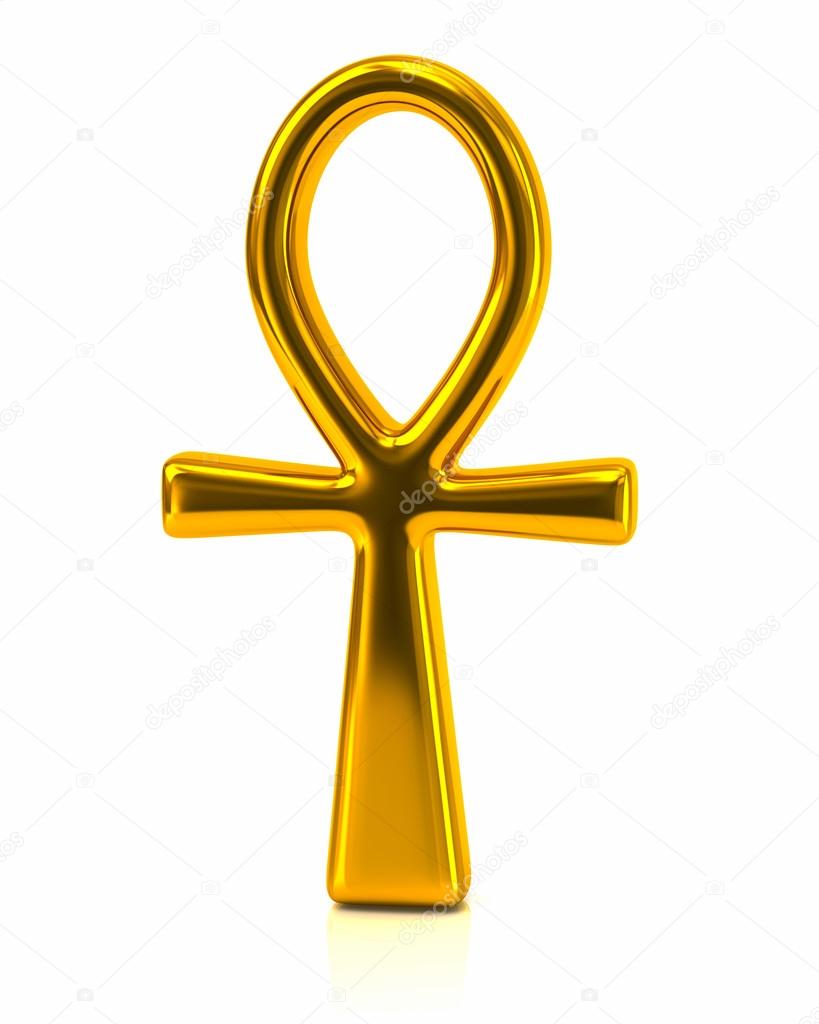
What Is an Ankh?
An ankh is an ancient Egyptian hieroglyph shaped like a cross with a loop, or teardrop, where the top arm should be. In the Egyptian writing system it is a single sign that spells the consonants ʿ-n-ḫ, and it carries one word: life.
That is the crucial thing most descriptions skip. The ankh is not a decorative emblem that someone later decided should represent life. It is the word for life. When an Egyptian scribe wrote "may he live forever," the ankh sign did the work of the word "live." Its meaning is not symbolic in the loose modern sense — it is literal, the way the letters L-I-F-E are literal.
Everything else the ankh came to stand for — immortality, divine protection, the breath of the gods — grew out of that one plain fact. If you want the full theological picture, we unpack it in detail in our guide to what the key of life actually meant to the Egyptians.
What Does the Ankh Symbol Mean?
The ankh means life — but Egyptian "life" was a wider idea than ours. It covered four things at once, and the symbol carried all four simultaneously:
- Life in the ordinary sense — breath, heartbeat, health, the years you are given.
- Life after death — continued existence in the afterlife, which Egyptians regarded as the real and permanent form of living.
- The power to give life — which is why gods hold the ankh and mortals almost never do.
- Protection — because a god who can grant life can withhold death.
This is why the ankh appears where it does. In temple reliefs you will constantly see a deity holding an ankh to a pharaoh's nose or lips. The gesture is not a greeting. It is the god breathing life into the king — a visual sentence, not an ornament. The ankh sits alongside the djed pillar (stability) and the was sceptre (dominion) as one of three signs that together spelled out everything a ruler was granted, and you can see all three in our wider survey of the symbols ancient Egypt used most.

Where Did the Ankh Come From?
Nobody knows for certain, and any source that tells you otherwise is guessing with confidence. The sign is already fully formed in the Early Dynastic Period, around 3000 BCE, which means its origin lies in a period that left us almost no explanatory writing.
Four explanations are taken seriously by Egyptologists:
- A sandal strap. The loop goes over the instep, the crossbar is the strap across the foot. Sir Alan Gardiner, whose sign list is still the standard reference, argued this — partly because the Egyptian words for "sandal strap" and "life" sound alike.
- A knot of cloth or reed. Knots carried magical force in Egyptian thought; a tied knot bound and preserved.
- A mirror case. Bronze mirrors of exactly this outline survive, and mirrors were associated with life and rebirth.
- A stylised union of male and female. Popular in modern writing, weakest in the actual evidence. Treat it with caution.
The honest answer is that the ankh's shape is older than the explanations for it. What we can say for certain is what it did, and that is documented on nearly every temple wall in Egypt.
How the Ankh Is Written in Hieroglyphs
In Gardiner's sign list the ankh is S34, filed under "crowns, dress and staves." It works two ways in a text. As an ideogram it stands alone and simply means "life." As a phonogram it supplies the three consonants ʿ-n-ḫ, which let scribes build related words — ʿnḫ (to live), ʿnḫw (the living), ʿnḫt (a bouquet, literally a "life-bunch" offered to the gods).
Because Egyptian wrote only consonants, the vowels are lost. Nobody alive has heard the word said the way a Theban priest said it. If you want to see how your own name breaks down into the same alphabet, our free hieroglyphics translator will spell it out sign by sign.
How Do You Pronounce Ankh?
Say it "ANGK" — one syllable, rhyming roughly with "bank" without the b. The kh is not a hard English K; in Egyptian it was a throat sound closer to the ch in Scottish "loch" or German "Bach". Most English speakers land on "ank" and that is perfectly understood.
Egyptologists conventionally read it as "ankh" with a short a. The Coptic descendant of the word, written onh, suggests the vowel may have been closer to an "o" — so a scholar reading aloud might say something nearer "onkh." Both are defensible. Neither is what an ancient Egyptian actually said, because we do not know the vowels.
How Do You Spell Ankh?
The standard English spelling is a-n-k-h. Plural: ankhs. Those are the forms used in every museum label and academic text you will meet.
Several other spellings circulate, and it is worth knowing which are legitimate and which are simply mistakes:
- ʿnḫ — the scholarly transliteration, with diacritics. Correct, but only used in academic writing.
- Ankhe, anhk, ahnk — misspellings. Common ones, but not variants.
- Crux ansata — Latin for "cross with a handle." Genuinely correct, and the term you will find in older European books and in early Christian contexts.
- Key of life, key of the Nile, Egyptian cross — all in general use, all referring to the same object.
The Ankh in the Hands of the Gods
Look carefully at Egyptian art and a rule emerges: gods hold ankhs, people do not. The symbol is held by the loop, dangling from a finger, like a key held by its bow — which is exactly where the "key of life" nickname comes from.
Isis carries it. Osiris carries it in the underworld. Hathor offers it. Anubis holds it over the mummified dead. In the Amarna reliefs, the sun-disc Aten reaches down dozens of rays, and each ray ends in a tiny hand holding an ankh to the royal family's face — one of the most striking images in all Egyptian art, and a very literal statement about who was giving life to whom.
The ankh also travels in company. It is frequently paired with the protective eye symbols, and the relationship between them confuses a lot of people — we sorted it out properly in our comparison of the two great eyes of Egyptian myth. For the full roster of deities who appear holding one, see our list of the gods of Egypt.
The Ankh and the Pharaohs
Pharaohs received the ankh; they did not generally wield it. That distinction mattered. The king was the point where the divine and human worlds touched, and the ankh pressed to his nostrils in a temple relief is the moment of transfer being recorded in stone.
Royal names were built around it. Tutankhamun means "living image of Amun" — the ankh is right there at the front of the name. His predecessor Akhenaten's throne name, his queen Ankhesenamun's name, and hundreds of ordinary Egyptian names all carry the same sign. When Tutankhamun's tomb was opened, ankhs were everywhere in the burial goods: a mirror case cut in the shape of one, ankh-headed lamps, ankhs worked into the collars and the shrines.
Where You Can See a Real Ankh in Egypt
Photographs flatten it. The ankh is carved at a scale that only makes sense when you are standing under it — sometimes a few centimetres, sometimes taller than a person. These are the places where it is unmissable:
- Karnak Temple, Luxor — the largest concentration of ankh reliefs anywhere. On the columns of the Hypostyle Hall the gods hand ankhs to kings on almost every surface.
- Luxor Temple — the birth-room reliefs show the god Khnum and Hathor presenting the ankh to the infant king.
- The Valley of the Kings — painted, not carved, and the colour survives. Ankhs in the hands of Anubis and Osiris, still vivid.
- Abydos, Temple of Seti I — the finest low relief in Egypt. Ankhs cut with a precision that is genuinely hard to believe in person.
- Philae, Aswan — where ankhs sit beside early Coptic crosses on the same walls, because the temple was later used as a church.
- The Egyptian Museum, Cairo — Tutankhamun's ankh-shaped mirror case, among many others.

Karnak, Luxor Temple and the Valley of the Kings sit within a few miles of each other, which is why most of our Nile cruises take them in over the same few days. If you would rather not travel on a boat, the 5-day Cairo and Luxor package covers the museum and the Theban temples on land, and a private guided tour is the version to choose if you want to spend an unhurried hour on the reliefs rather than twelve minutes.
The Ankh Cross: Why It Looks Christian
The resemblance is not a coincidence, and the history is better documented than most people expect.
When Christianity spread through Egypt in the third and fourth centuries CE, the converts were Egyptians. They already had a five-thousand-year-old sign meaning "life," and a new faith whose central promise was eternal life. Coptic Christians adopted the ankh directly, and it became the crux ansata — the handled cross — used in Coptic manuscripts, carved on Coptic tombstones, and cut into the walls of temples that had been converted into churches.
You can see the handover physically at Philae and at Luxor Temple, where crosses were carved over and beside pharaonic reliefs. The ankh is one of the very few religious symbols in history to pass intact from one religion to a completely different one without changing its meaning.
Is the Ankh a Christian Symbol?
It is both, and that is the accurate answer rather than a dodge. The ankh is originally and primarily an ancient Egyptian symbol. It is also, historically and legitimately, a Coptic Christian symbol, used by the Coptic Orthodox Church of Alexandria for roughly seventeen centuries.
What it is not is a symbol of any modern Western denomination. If you see an ankh in a European or American church context, it has usually been borrowed recently rather than inherited. In Egypt itself the crux ansata has an unbroken lineage.
Can a Christian Wear an Ankh?
Coptic Christians have worn it for seventeen hundred years, so there is a long precedent. Whether it is appropriate in another Christian tradition is a question for that tradition rather than for a history page — some clergy view it as a legitimate early Christian form, others prefer it kept distinct from the Latin cross. Historically, there is nothing pagan-by-contamination about it: by the fourth century in Egypt it had become a Christian symbol in its own right.
Is the Ankh Demonic or Occult?
No. This one comes up often enough to deserve a straight answer. There is no ancient association between the ankh and anything malevolent. It is a sign meaning "life," used by priests, kings, and later by Christian monks.
The suspicion is modern and traceable. Twentieth-century occult revivalists borrowed Egyptian imagery wholesale, and the ankh was picked up along with everything else; certain twentieth-century preaching then treated any borrowed symbol as suspect. Neither the borrowing nor the reaction tells you anything about what the symbol meant in Egypt, where its associations were overwhelmingly positive — health, breath, protection, and continued existence after death. You will find the same pattern with most of the protective symbols the Egyptians used.
The Ankh and the Eye of Horus
These two are the most-searched Egyptian symbols and they are constantly muddled, so it is worth separating them cleanly:
- The ankh means life. It is a word — a hieroglyph that appears inside sentences.
- The Eye of Horus means wholeness, healing and restoration. It comes from a myth: Horus lost the eye in combat with Set, and it was made whole again.
- The Eye of Ra is a different eye entirely, and is closer to a weapon than a blessing.
They are frequently worn together, on amulets and in modern jewellery, because they cover complementary ground: the ankh gives life, the eye protects and repairs it. If you have ever wondered which eye is which, our page on how the two eyes differ is the one that settles it.
The Ankh as an Amulet
Ankh amulets survive in enormous numbers, in faience, gold, carnelian, lapis, wood and glazed steatite. They were worn in life and wrapped into mummy bandages in death, placed so the sign lay over the body it was meant to keep alive.
The material was not incidental. Blue-green faience was chosen deliberately, because that colour was the colour of the Nile, of new growth, and of rebirth. An ankh amulet in turquoise faience was saying the same thing twice — once in shape, once in colour.
The Ankh in Jewellery, Tattoos and Modern Culture
The ankh never really stopped being worn. It came back into wide circulation in the 1960s and 1970s, and it is now one of the most common symbols in tattoo work and jewellery worldwide — gold pendants, silver chains, ankh rings, ankh earrings.
It carries different meanings for different communities. In Black American and Pan-African culture it is a symbol of African heritage and continuity. In goth and post-punk subculture it became an emblem from the early 1980s onward — largely traceable to The Hunger (1983), in which the vampire characters wear ankh pendants that double as blades, after which the ankh became shorthand for immortality in that whole aesthetic. In New Age practice it is worn for vitality and protection.
Where the symbol shows up in ancient art and in the jewellery trade specifically — what it was made of, how it was worn, how to tell a good reproduction from a bad one — is covered in our companion piece on the ankh in Egyptian art and jewellery.
The Ankh Symbol to Copy and Paste
The ankh has its own Unicode character, so you do not need an image to use it:
☥
- Character: ☥
- Unicode: U+2625, named ANKH
- HTML entity:
☥ - Windows: hold Alt and type 9765 on the numeric keypad
- Mac: Control-Command-Space, then search "ankh"
Note that ☥ is a typographic symbol, not the hieroglyph. The hieroglyphic sign lives in a separate Unicode block (Egyptian Hieroglyphs, U+13000–U+1342F) where the ankh is U+133AA, and it needs a hieroglyphic font to display. Our hieroglyph tool renders those properly if you need the authentic form.
See the Ankh Where It Was Carved
There is a limit to how much a symbol can tell you from a screen. The ankh was cut into sandstone in the Nile valley, and that is where it still is — in the Hypostyle Hall at Karnak, on the painted walls of the royal tombs, in the hands of gods at Abydos and Philae.
EZ Tour Egypt runs the trips that take you to all of them. A 4-day Nile cruise covers Luxor and Aswan and the temples between; the Luxor, Aswan and Abu Simbel tour adds the great rock temples of the south; and if you are short on time, a single day tour from Cairo or Hurghada will still put you in front of the real thing.
Explore More Symbols of Ancient Egypt
The ankh is one sign in a much larger visual language. These are the pieces that connect to it:
Continue through the symbols of ancient Egypt:
- Ankh Meaning: what the key of life really represents
- The Egyptian Ankh in Art and Jewellery
- Eye of Ra vs Eye of Horus
- Egyptian Symbols and What They Mean
- 90 Things About Egyptian Protection Symbols
- Free Hieroglyphics Translator
What does the ankh represent?
Life. In ancient Egypt the ankh represented life in every sense the culture recognised — physical life and breath, eternal life after death, and the power held by gods and kings to grant both. It is the hieroglyph that literally spells the word.
What does the ankh symbolize?
Life, immortality and divine protection. Because gods are shown holding it to the noses of pharaohs, it also symbolises the transfer of life from the divine world to the human one. Its nickname, the key of life, comes from the way it is carried — by the loop, like a key.
What does the ankh stand for?
It stands for the Egyptian word ʿnḫ, meaning "life" or "to live." It is not an abbreviation of anything. The sign and the word are the same thing.
What is the ankh cross?
"Ankh cross" and crux ansata both describe the ankh in its Christian use. Coptic Christians in Egypt adopted the symbol from the third century CE onwards, keeping its meaning of eternal life and using it in manuscripts, on tombstones and in converted temples. The same shape, two religions, one meaning.
What religion is the ankh from?
Ancient Egyptian religion, and later Coptic Christianity. It is not associated with any other faith historically, though it has been adopted by various modern spiritual movements.
How do you say ankh?
"ANGK," one syllable. The final kh is a throat sound rather than a hard K — like the ch in "loch." Some Egyptologists read it closer to "onkh," following the Coptic form. The vowels are unrecorded, so no pronunciation is provably correct.
Who was allowed to hold an ankh?
In art, gods — and pharaohs receiving it from gods. Ordinary Egyptians are almost never shown holding one, though they wore ankh amulets in enormous numbers. The distinction is deliberate: holding the sign meant possessing the power to give life, not merely to have it.
What were ankh amulets made of?
Most commonly blue-green faience, chosen because that colour meant the Nile, growth and rebirth. Also gold, carnelian, lapis lazuli, glazed steatite, wood and glass. They were worn in life and placed inside mummy wrappings after death.
Is the ankh the same as the Eye of Horus?
No. The ankh means life; the Eye of Horus means wholeness, healing and restoration after damage. They are often worn together because the meanings complement each other, but they come from different places — the ankh from the writing system, the eye from a myth about Horus and Set.
Where can I see the ankh in Egypt?
Karnak and Luxor Temple have the greatest concentration; the Valley of the Kings has the best-preserved painted examples; Abydos has the finest carving; Philae shows ankhs and Coptic crosses on the same walls; and the Egyptian Museum in Cairo holds Tutankhamun's ankh-shaped mirror case. All of them appear on our Nile cruise itineraries.
Stand in Front of One Yourself
We are an Egyptian company, based in Egypt, running small-group and private trips to the temples where these symbols were carved. Tell us how long you have and what you want to see, and we will build the itinerary around it.
Start planning your Egypt trip → · View Nile cruise itineraries · Book a day tour · Cairo and Luxor in three nights
Planning your Egypt trip?
Tell us your dates and what you want to see. Our local team replies within 24 hours with a tailor-made plan and a clear price.
Get your free consultation