
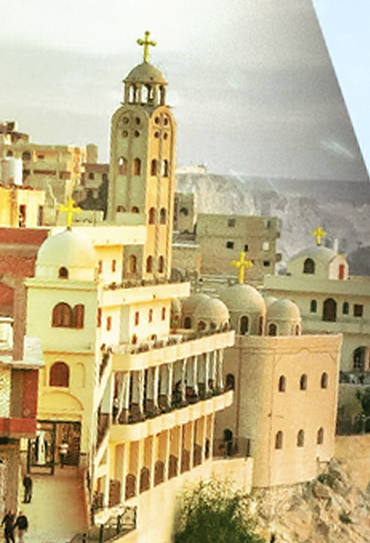
The Monasteries of the Holy Family Route in Middle Egypt
Deir el-Muharraq, Gabal el-Teir and Deir Dronka — three working monasteries on the stretch of Nile between Cairo and Assiut that almost no visitor reaches.
- Licence 547 — Egyptian Ministry of Tourism
- 40 years operating in Egypt
- Written by our Cairo team
Egypt invented the monastery
Before the monasteries on this route make sense, one fact is worth having: Christian monasticism began in Egypt. Not in Europe, not in Syria — in the Egyptian desert, in the third and fourth centuries.
St Anthony withdrew into the eastern desert around 270 AD and became the model of the hermit. St Pachomius, a generation later, organised solitaries into communities with a shared rule — the first monastery in the sense the word is now used. Everything from Benedictine abbeys to Irish scriptoria descends from that Egyptian invention.
So when you enter a monastery in Middle Egypt, you are not visiting a provincial copy of a European institution. You are at the source.
Deir el-Muharraq, Assiut
The most significant monastery on the Holy Family route, and the southernmost point of the tradition.
Coptic tradition holds that the family stayed here about six months — the longest of all their stops — and that it was here the angel appeared to Joseph a second time to tell him it was safe to return.
At its heart is the Church of the Virgin Mary, which the monastery holds to be among the oldest churches in Egypt. Its altar stone is venerated as the bed on which the child slept. Above the complex stands a keep, the fortified tower common to Egyptian monasteries, built so the community could withdraw and hold out during raids.
It remains a large working monastery with a substantial community of monks, not a ruin.
Gabal el-Teir, Samalut, Minya
Also written Gebel el-Teir or Deir Gabal al-Tair — the Mountain of the Birds, named for the flocks that nest in the cliff face.
The Monastery of the Virgin Mary sits on the escarpment on the east bank of the Nile, and the church is cut into the rock. Tradition attributes its foundation to the Empress Helena, mother of Constantine, in the fourth century, on a spot where the Holy Family is said to have rested. Its cave church is among the oldest continuously used Christian sites in Egypt.
The position is the thing. The cliff drops to the river, and the view over the valley from the monastery terrace explains, better than any text, why the route ran where it did.
Deir Dronka, Assiut
The Monastery of the Virgin Mary at Dronka, cut into the mountainside south-west of Assiut, on a site with a cave that tradition connects to the family’s stay.
What makes Dronka remarkable is not the architecture but the moulid — the annual pilgrimage in August, tied to the feast of the Assumption. It draws enormous crowds, well into the hundreds of thousands, and it is one of the largest Christian gatherings in the Middle East.
If you are there for it you will see something few outsiders ever do. If you are not looking for crowds, avoid August entirely.
What these places are actually like
They are working religious communities, not visitor attractions. There are no ticket booths, no gift shop of the kind you find at Giza, no queue management. Monks live there and services run on their own schedule.
Most of the people you see will be Egyptian pilgrims, often families, frequently making an annual visit. Foreign visitors are unusual enough to be noticed, and are generally welcomed warmly — but the register is that of a church, not a museum.
Photography is usually tolerated outside and restricted inside. Modest dress is expected. Shoes come off in some chapels. A guide who knows the etiquette makes a considerable difference here, more than at any pharaonic site.
Getting to them
This is the part that keeps most visitors away, and it is worth being straight about.
Middle Egypt has limited tourist infrastructure. Hotels in Minya and Assiut are basic by the standards of Luxor or Cairo. Road journeys between the monasteries are long, and travel in the region has at times been subject to convoy or permit arrangements that change without much notice.
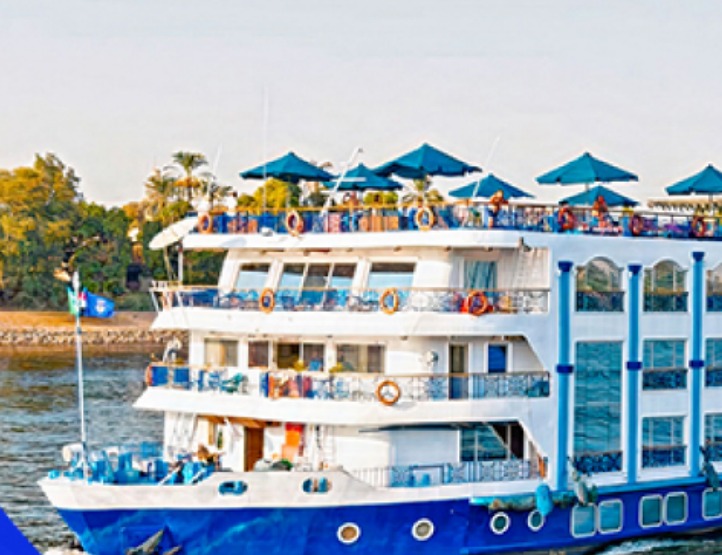
That is precisely why we run the route by river. On a cruise the boat is the hotel, the sailing happens overnight, and each monastery is reached from a mooring rather than by a several-hour drive from a town. It removes the two things that make Middle Egypt hard.
The five-day cruise
Cairo to Beni Suef, Minya and Assiut and back — calling at Gabal el-Teir, Deir el-Muharraq and Deir Dronka. Four nights on board, full board, from US$ 625 per person. Drinks are charged separately.
It is the practical way to see all three without a week of driving.
The other Egyptian monasteries, and why they are not on this route
Worth knowing, so you can tell them apart when planning.
Wadi el-Natrun, between Cairo and Alexandria, holds four ancient monasteries and is the historic heart of Coptic monasticism. It is in the Delta, north-west of Cairo — a day trip from the capital, not part of the southern river route.
St Anthony’s and St Paul’s lie in the eastern desert near the Red Sea. St Anthony’s is generally considered the oldest monastery in the world. They are reached from the Red Sea road, usually combined with Hurghada, and again are not on the Nile route.
St Catherine’s is in Sinai, at the foot of the mountain, and is Greek Orthodox rather than Coptic. Different peninsula, different church, different trip.
All are worth seeing. None of them is on the Cairo–Assiut stretch, and we would rather say so than let a booking arrive with the wrong expectation.
Questions about the Middle Egypt monasteries
Which monasteries are on the Holy Family route?
On the Nile stretch between Cairo and Assiut, the principal three are Gabal el-Teir near Samalut in Minya, Deir el-Muharraq and Deir Dronka, both near Assiut. The wider Coptic tradition names around twenty-five sites in total, including several around Cairo and in the Delta.
What is Deir el-Muharraq known for?
It is held to be the site of the Holy Family’s longest stay in Egypt, about six months, and the place where Joseph was told it was safe to return. Its Church of the Virgin Mary is venerated as one of the oldest in the country, and the monastery keeps a fortified tower of the kind Egyptian monasteries built for defence.
Can tourists visit these monasteries?
Yes, and visitors of any faith are welcome. They are working communities rather than ticketed sites, so modest dress and quiet conduct are expected, and access can depend on services and on the monastery’s own schedule.
When is the pilgrimage at Deir Dronka?
In August, around the feast of the Assumption. It is one of the largest Christian gatherings in the Middle East and draws crowds in the hundreds of thousands. Extraordinary to witness, and to be avoided if you want quiet.
Is it safe to travel in Middle Egypt?
The monasteries receive very large numbers of Egyptian pilgrims and the region is visited routinely. What genuinely differs from Luxor or Cairo is infrastructure, not danger: fewer good hotels, longer drives, and arrangements for foreign travel that can change at short notice. Travelling by river avoids most of that, and a licensed operator handles the permissions. As anywhere, check your own government’s current advice.
Why is monasticism connected to Egypt?
Because it started there. St Anthony withdrew to the eastern desert in the third century and became the model hermit; St Pachomius then organised solitary ascetics into communities under a common rule, creating the first monasteries. The entire later monastic tradition traces back to that.
Can I combine these with Luxor and the pyramids?
Yes, and most overseas visitors do. The usual shape is Cairo and Giza, then this cruise through Middle Egypt, then a southern itinerary for Luxor and Aswan. Tell us the total number of days and we will build it as a single trip.
See all three from the river
The cruise reaches each monastery from a mooring instead of a long drive, and the boat is your hotel. Tell us your month and group size for dates and a written price.